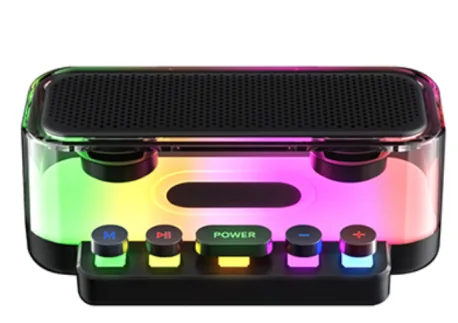
A private label Bluetooth speaker project should begin with a proven product platform and a clear retail brief. Buyers need to define which features are essential, where branding will appear, what packaging must communicate and which sample will become the production reference. This guide turns those decisions into a practical supplier conversation.
Huazeng's Bluetooth speaker collection includes portable models, RGB-light designs, soundbars, display speakers and wireless-charging products. Each platform offers a different balance of customization effort, sample risk and retail differentiation.
1. Choose the product platform before discussing decoration
Start with the customer, sales channel and intended use. A compact promotional speaker, a party speaker and a bedside charging speaker require different price positions, packaging stories and sample tests. Shortlist models using verified specifications rather than selecting only from appearance.
| Platform | Retail angle | Key approval questions |
|---|---|---|
| Compact portable speaker | Travel, gifting, desk use | Size, sound, battery scenario, carry method |
| RGB or novelty design | Youth, gaming, impulse retail | Light modes, controls, finish, artwork visibility |
| Party speaker | Outdoor and social use | Output, handles, battery test, packaging strength |
| Charging speaker | Bedside or office convenience | Device alignment, input power, simultaneous use |
| App or display speaker | Interactive and gift-led ranges | App flow, firmware, display content, reset behavior |
2. Define logo placement, color and finish as separate decisions
Provide the logo file, intended print size, color reference and preferred location. Ask the supplier to confirm the decoration method available for the selected material and surface. A logo that works on a flat ABS housing may not reproduce the same way on fabric, a grille or a curved part.
Color approval should use a named reference or approved physical sample. Review plastic, fabric, metal and printed parts under the same lighting because they may not appear identical even when they follow one color direction. Record acceptable variation before mass production.
3. Decide which functions belong in the retail promise
Feature-rich models create more selling points and more approval work. The HZ-B150 combines dual 5W speakers, Bluetooth 5.3 and RGB lighting. A private-label brief should state which functions appear on the front of the box and how buyers will test them.
The HZ-B313 pixel-art speaker adds app control, TWS, lighting and a time display. For this type of product, app pairing, saved settings and display behavior need their own sample checklist.
4. Build packaging around accurate, approved claims
Packaging should use the same model identity, feature names and ratings as the approved product specification and manual. Before artwork approval, verify Bluetooth version, output power, battery statement, charging input, supported playback modes, included accessories and color.
A useful packaging brief includes dieline language, barcode space, destination labels, manual languages, accessory list, carton marks and image ownership. Avoid adding waterproof, runtime, charging-speed or compatibility claims unless they are supported for the exact configuration.
5. Approve the product sample and artwork together
Keep one revision log that connects the physical sample, logo proof, color reference, manual and packaging file. Test sound, controls, pairing, charging and every advertised secondary function. Then compare the observed behavior with the package and listing copy.
For combination products such as the HZ-B275 wireless-charging speaker, check audio and phone charging separately and simultaneously. Confirm the required input power and device conditions before describing charging performance.
6. Prepare a private-label speaker RFQ
- target country, sales channel and customer profile;
- preferred speaker type or model numbers;
- estimated quantity and launch timing;
- must-have audio, lighting, charging or app functions;
- logo artwork, color references and finish direction;
- packaging format, languages, barcode and label requirements;
- accessories and manual requirements;
- destination-market documents to confirm.
Send the same brief to every supplier so the quotations describe comparable configurations. Separate confirmed specifications from options that still require sampling.
Planning a private-label Bluetooth speaker range?
Send Huazeng the target market, preferred speaker style, estimated quantity and branding requirements. We can help shortlist relevant models and define the next sample and quotation step.
Request a Private Label QuoteFrequently asked questions
Can I start a private-label project from an existing speaker model?
Yes. Starting from an existing platform can focus the project on model selection, branding, color, packaging and the options available for that product.
What files should I send for speaker branding?
Send vector logo artwork where available, color references, intended placement, packaging language and any brand rules that affect size or clear space.
When should packaging artwork be approved?
Approve final artwork after the product configuration and feature wording are stable. Keep the artwork revision linked to the approved physical sample.
What affects a private-label speaker quotation?
The selected model, functions, decoration, color, packaging, accessories, quantity, destination and documentation requirements can all affect the quotation.