Choosing an OEM LED desk lamp starts with the intended task, not the longest feature list. Buyers should define the application, light controls, adjustment, footprint, power arrangement and retail story before comparing samples. This turns broad terms such as “eye-caring” or “wireless charging” into specific questions a supplier can answer.
Huazeng’s LED desk lamp collection includes rechargeable, adjustable, full-spectrum and wireless-charging concepts for study, office, bedside and portable use.
1. Choose the application and retail position
| Application | Buyer priority | Sample focus |
|---|---|---|
| Study or homework | Useful task-light area and simple controls | Distribution, dimming, adjustment |
| Office desk | Footprint, appearance and workday convenience | Stability, glare, cable routing |
| Bedside | Easy low-light operation | Minimum brightness, control visibility |
| Portable or dorm | Compact storage and flexible placement | Battery scenario, folding mechanism |
| Charging station | Lighting plus device charging | Alignment, indicators, simultaneous use |
A lamp designed around one clear use case is easier to merchandise. Define the primary promise first, then select supporting features that reinforce it.
2. Translate light specifications into buyer checks
Review power, lumen output, color temperature and color rendering information where supplied, but do not approve a lamp from a specification sheet alone. Test the visible light distribution on the intended desk area, the transitions between dimming levels and the controls under normal room lighting.
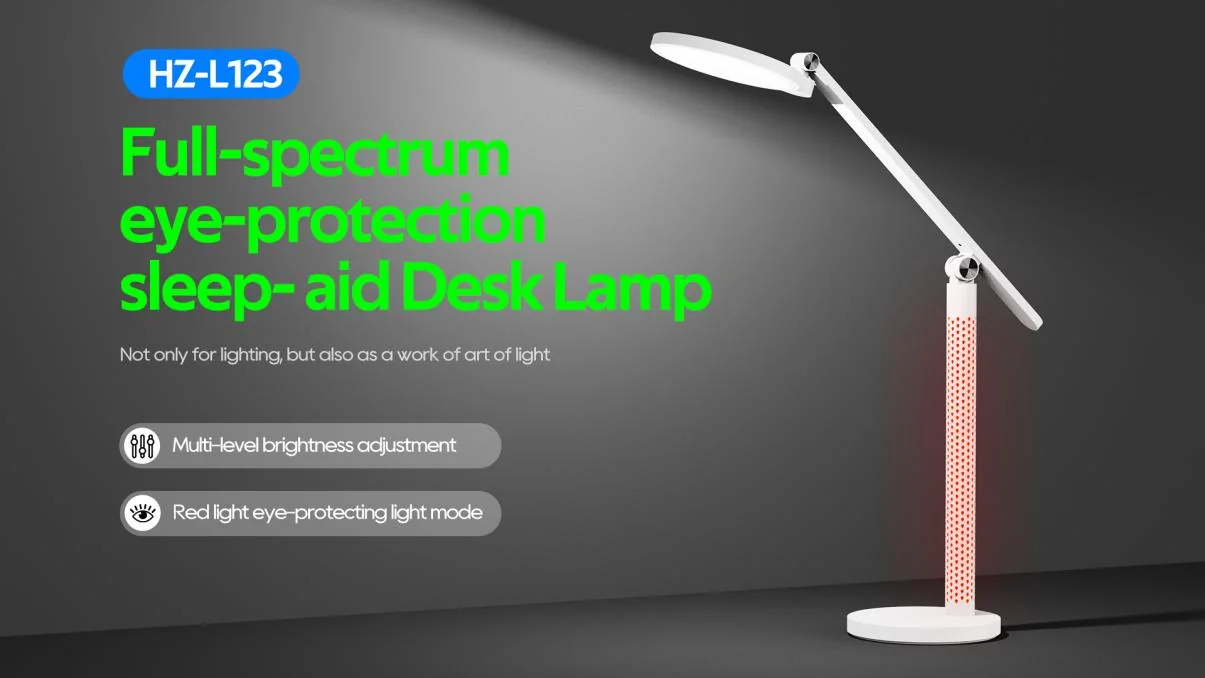
The HZ-L123 full-spectrum desk lamp lists 18W power, CRI above 98, a 4000K color temperature and 800 lumens within the supplied tolerance. A buyer should verify the selected sample and supporting documentation before using those figures in retail artwork.
Use “eye-caring” carefully. Tie any comfort, flicker, spectrum or glare statement to the actual model, test method and documents available for the target market. Avoid medical or health promises that the evidence does not support.
3. Evaluate dimming, color temperature and control logic
Check whether controls are obvious without reading the manual. Move through every brightness and color-temperature setting, power-cycle the lamp and note whether it remembers the previous state. If the lamp has a timer or night mode, verify the actual behavior and how it will be explained on the package.
For example, the HZ-L068 table lamp lists three color-temperature settings, dimming and timing functions. These functions should be treated as separate sample tests rather than one general “lighting works” result.
4. Test adjustment, stability and desk footprint
Measure the base on a representative desk and move the arm or head through its full range. Check whether the lamp tips, joints drift or the light source enters the user’s direct line of sight. Repeat adjustment cycles to identify early looseness. For foldable products, confirm the closed size and how the cable and adaptor fit into the retail package.
5. Verify charging features separately and together
Wireless charging changes the lamp from a lighting product into a combination device. Check phone alignment, case sensitivity, indicator behavior, cable and adaptor requirements, and charging while the lamp is operating. State clearly whether the quoted charging power depends on a compatible input adaptor.
The HZ-L024 4-in-1 lamp lists phone and earbud charging functions alongside the light. Test each output individually, then test simultaneous use so the listing and manual describe a configuration that the approved sample supports.
6. Review finish, labels and packaging consistency
Inspect color consistency, surface marks, seams, touch areas, hinge alignment and cable entry. Compare the product label, adaptor information, manual and color box. Model name, input ratings, included accessories and operating instructions should agree across all four.
Keep the front-of-pack message focused. “Adjustable study lamp with three light modes” is clearer than a crowded list of unrelated functions. Use a second panel or online listing for detailed specifications after they have been verified.
7. Prepare an LED desk lamp RFQ suppliers can answer
Include the following information in the same request sent to each supplier:
- target country, customer type and sales channel;
- primary application and target price position;
- required brightness controls and color-temperature options;
- preferred base, arm, folding or clip arrangement;
- power, battery or charging requirements;
- logo, finish, color and packaging direction;
- estimated quantity, sample deadline and launch timing;
- required market documents and labeling languages.
Huazeng’s OEM/ODM process starts with these inputs so model selection, sampling and commercial questions remain connected.
Build a focused LED desk lamp shortlist
Tell us the application, target market, expected quantity and required light or charging functions. Huazeng can identify relevant models and prepare a model-specific quotation discussion.
Request an LED Lamp QuoteFrequently asked questions
What makes an LED desk lamp easier to sell?
A clear use case, understandable controls and two or three verified benefits are usually easier to explain than a long list of unrelated features.
Are rechargeable desk lamps better for retail?
They fit channels where portability and flexible placement matter. Mains-powered models may suit permanent workstations. Compare the intended use before choosing.
How should I review an LED desk lamp sample?
Check light distribution, settings, dimming, adjustment, stability, charging, controls, finish, labels and consistency between the sample, manual and packaging.
What information affects an OEM desk lamp quote?
Lighting specifications, mechanical design, charging functions, materials, finish, branding, packaging, quantity, destination and documentation requirements can all affect the final quotation.